Toronto: Chow 50%, Bradford 39%; Voters Resist Tax Hikes
Olivia Chow leads Brad Bradford by 11 points among decided and leaning voters, while most Torontonians want the next budget to hold property tax increases below inflation or lower.

September 9, 2026 (Toronto, ON) - A new Liaison Strategies Toronto Pulse survey shows Mayor Olivia Chow leading Councillor Brad Bradford by 11 points among decided and leaning voters, while Torontonians push back against property tax increases ahead of the next city budget.
Among decided and leaning voters, Chow receives 50%, Bradford receives 39%, Chris Alexander receives 10%, and someone else receives 2%. In Liaison's August 20 Toronto survey, Chow stood at 49%, Bradford at 38%, Alexander at 11%, and someone else at 3%.
Among all voters, Chow is at 42%, Bradford is at 32%, Alexander is at 8%, someone else is at 1%, and 16% are undecided.
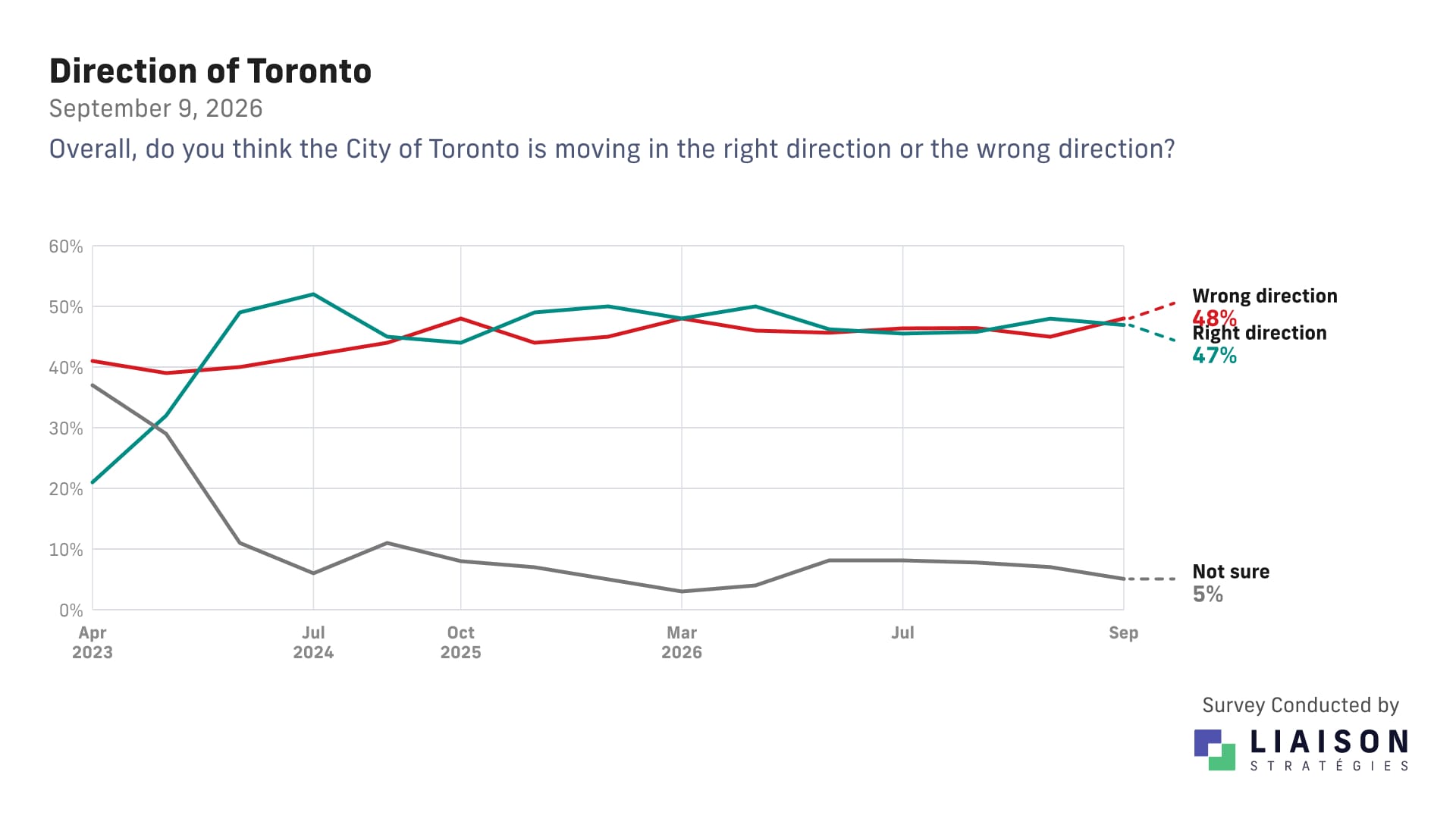
The survey also finds 47% of Torontonians say the city is moving in the right direction, while 48% say it is moving in the wrong direction and 5% are not sure.
Liaison surveyed a random sample of 1,000 Toronto residents from September 4 to September 5, 2026, using Interactive Voice Recording (IVR) technology. Participants were reached through random digit dialling (RDD) across both landline and cellular phone networks. The resulting data was weighted to match targets based on the 2021 Census. For the total sample, the margin of error is +/- 3.1 percentage points, 19 times out of 20. The margin is higher for sub-samples. Totals may not add up to 100% due to rounding.
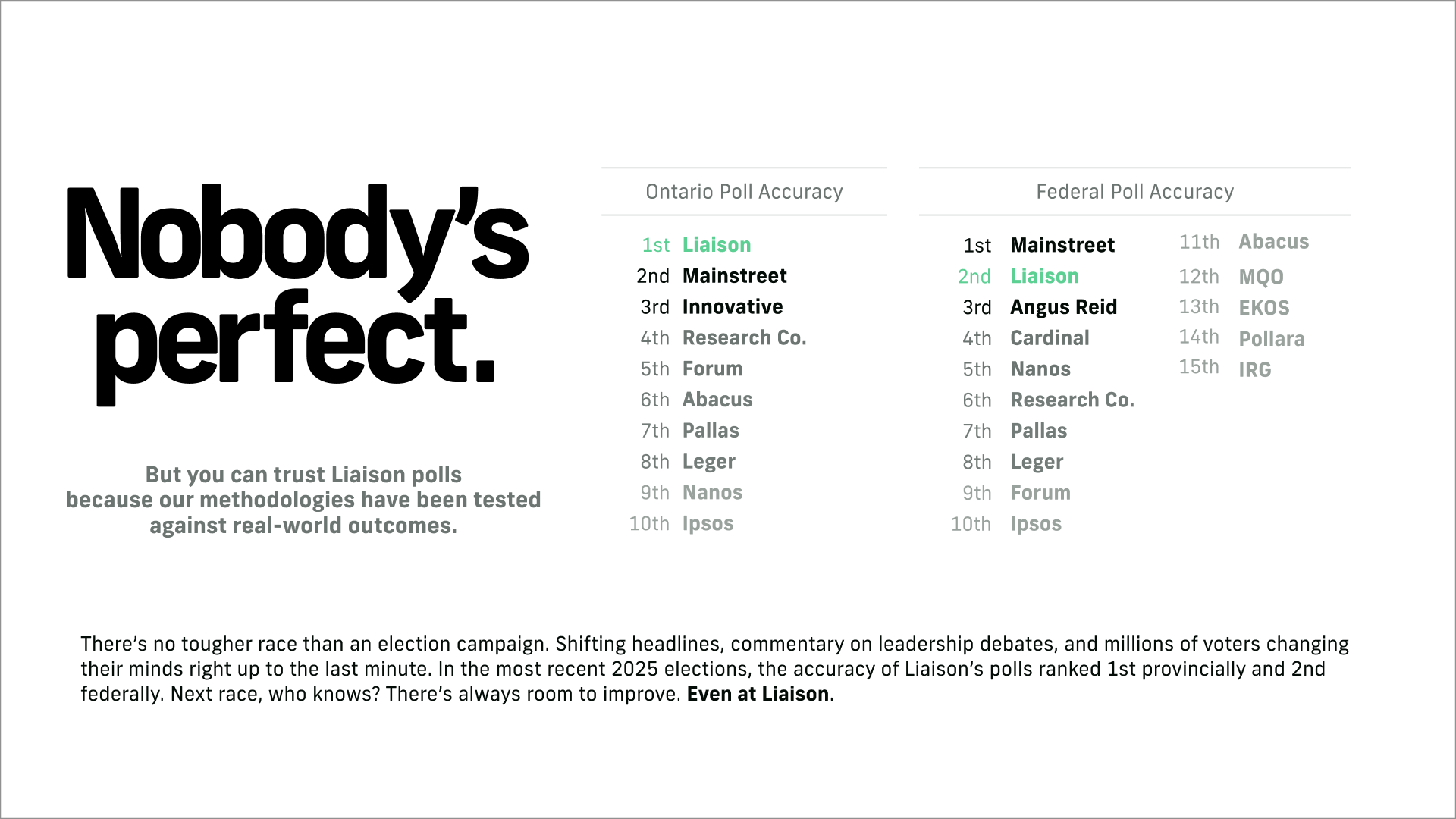
Liaison Strategies is one of the most accurate polling firms in Canada. It ranked #1 in accuracy in the 2025 Ontario election and #2 nationally in the 2025 federal election. Liaison is a member of the Canadian Research Insights Council.
David Valentin, Principal at Liaison Strategies, said:
"The mayoral ballot is stable, but it has settled in a better place for Olivia Chow than for her challengers. Among decided and leaning voters, Chow is at 50%, Bradford is at 39%, Alexander is at 10%, and someone else is at 2%."
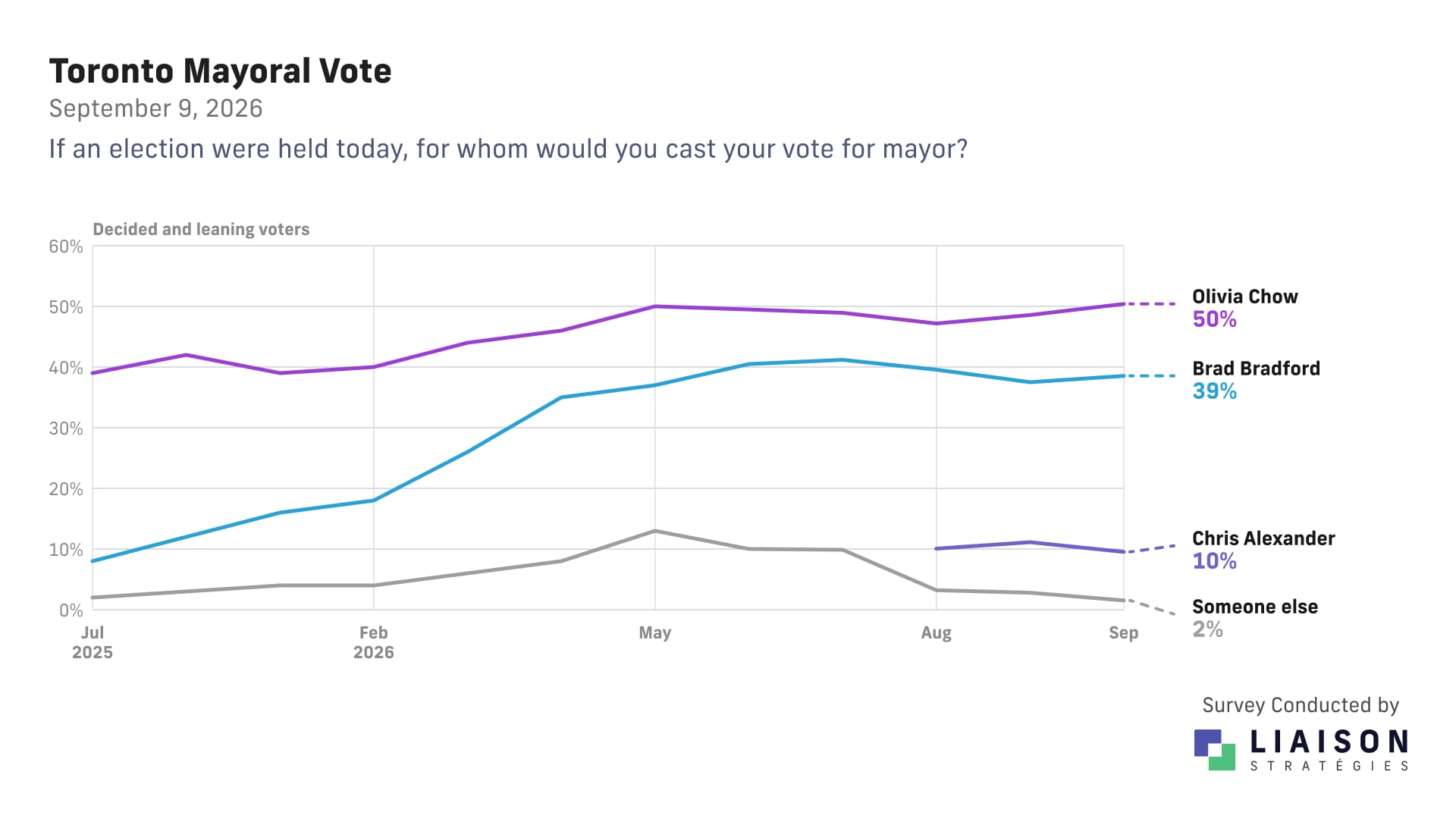
"Bradford remains competitive, but he is not closing the gap right now. The race has moved from a single-digit Chow lead in late July to an 11-point Chow lead in the last two Liaison Toronto surveys."
"The regional picture is still the key to the race. Chow leads Downtown 60% to 30%, in North York 53% to 36%, and in Scarborough 51% to 38%. Bradford's best region is Etobicoke, where he leads Chow 56% to 33%."
"The personal numbers are tougher for Bradford than the ballot number. He is at 31% favourable and 34% unfavourable, with 24% still not familiar with him. For a challenger, that is a difficult combination: enough name recognition to pick up resistance, but not enough positive definition to overtake the incumbent."
"Alexander is also better known than he was in August, but the movement is mixed. Forty-six per cent still say they are not familiar with him, while his favourable and unfavourable numbers are almost tied at 19% favourable and 20% unfavourable."
"Chow's approval is positive, but more strained. Fifty-one per cent approve of the job she is doing as mayor, while 45% disapprove and 4% are not sure. That is a narrower approval margin than earlier this summer."
"The city mood is not collapsing, but it is tilted the wrong way again. Forty-seven per cent say Toronto is moving in the right direction, while 48% say it is moving in the wrong direction. For an incumbent mayor, that kind of split is manageable, but it is not comfortable."
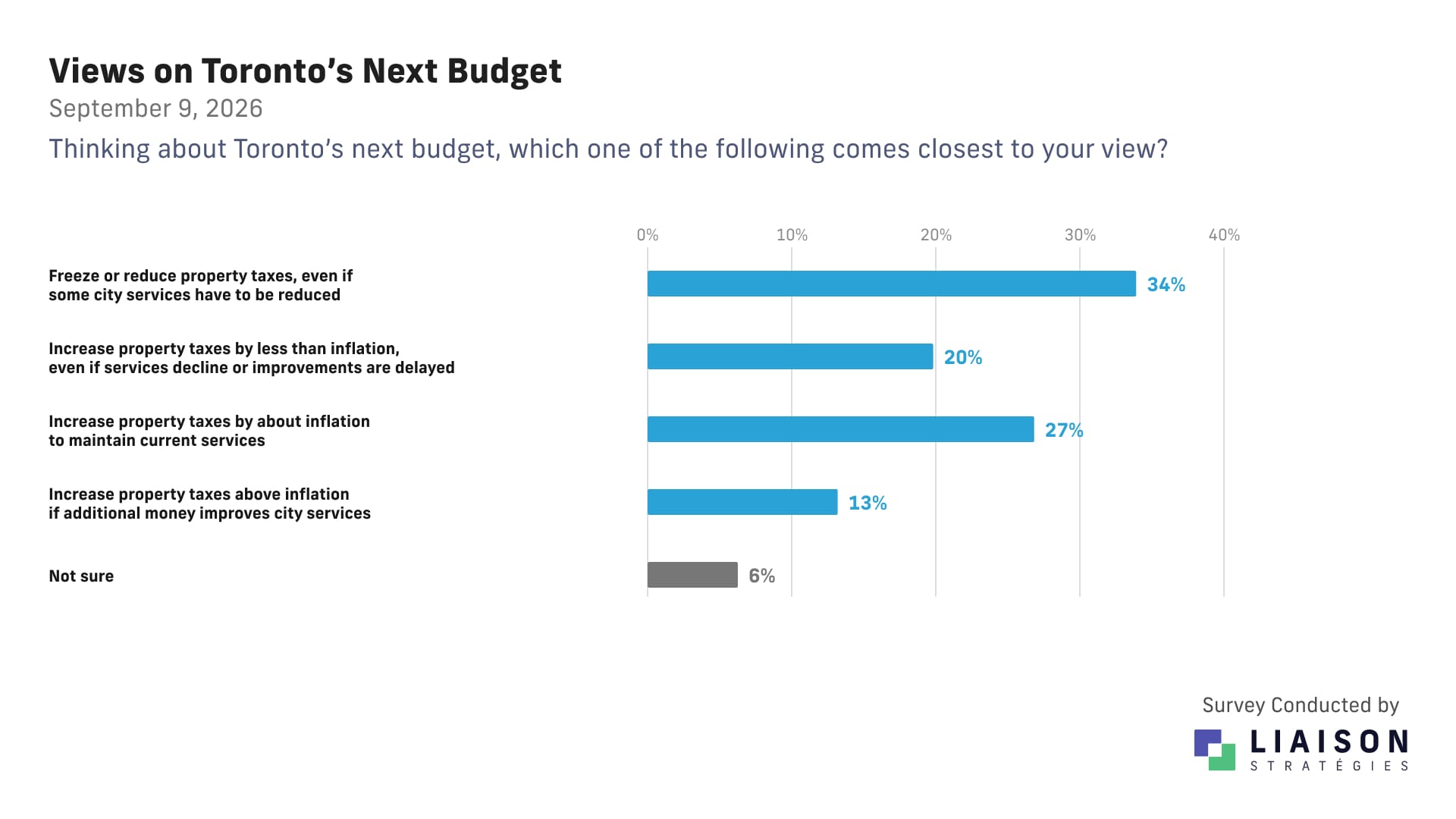
"The budget numbers are the loudest finding in this survey. Thirty-four per cent want property taxes frozen or reduced, even if some city services have to be reduced. Another 20% want property taxes to increase by less than inflation, even if some services decline or improvements are delayed."
"Put together, 54% of Torontonians are choosing a below-inflation tax path or lower. That is a clear warning for City Hall: voters may want better services, but they are not giving council an open cheque."
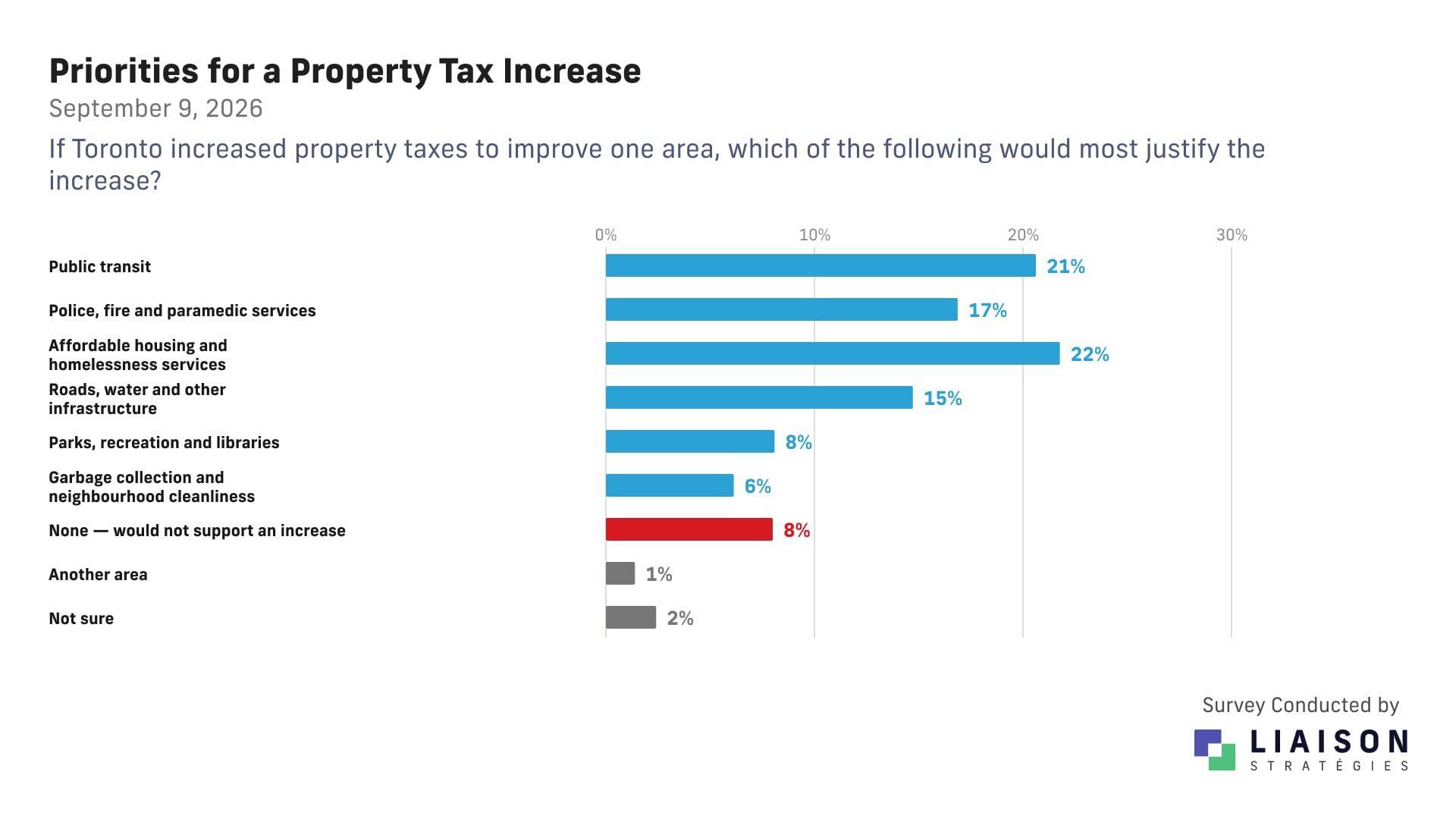
"When voters are asked what would justify a tax increase, the answers are practical. Affordable housing and homelessness services are at 22%, public transit is at 21%, and police, fire, and paramedic services are at 17%. There is no single runaway priority."
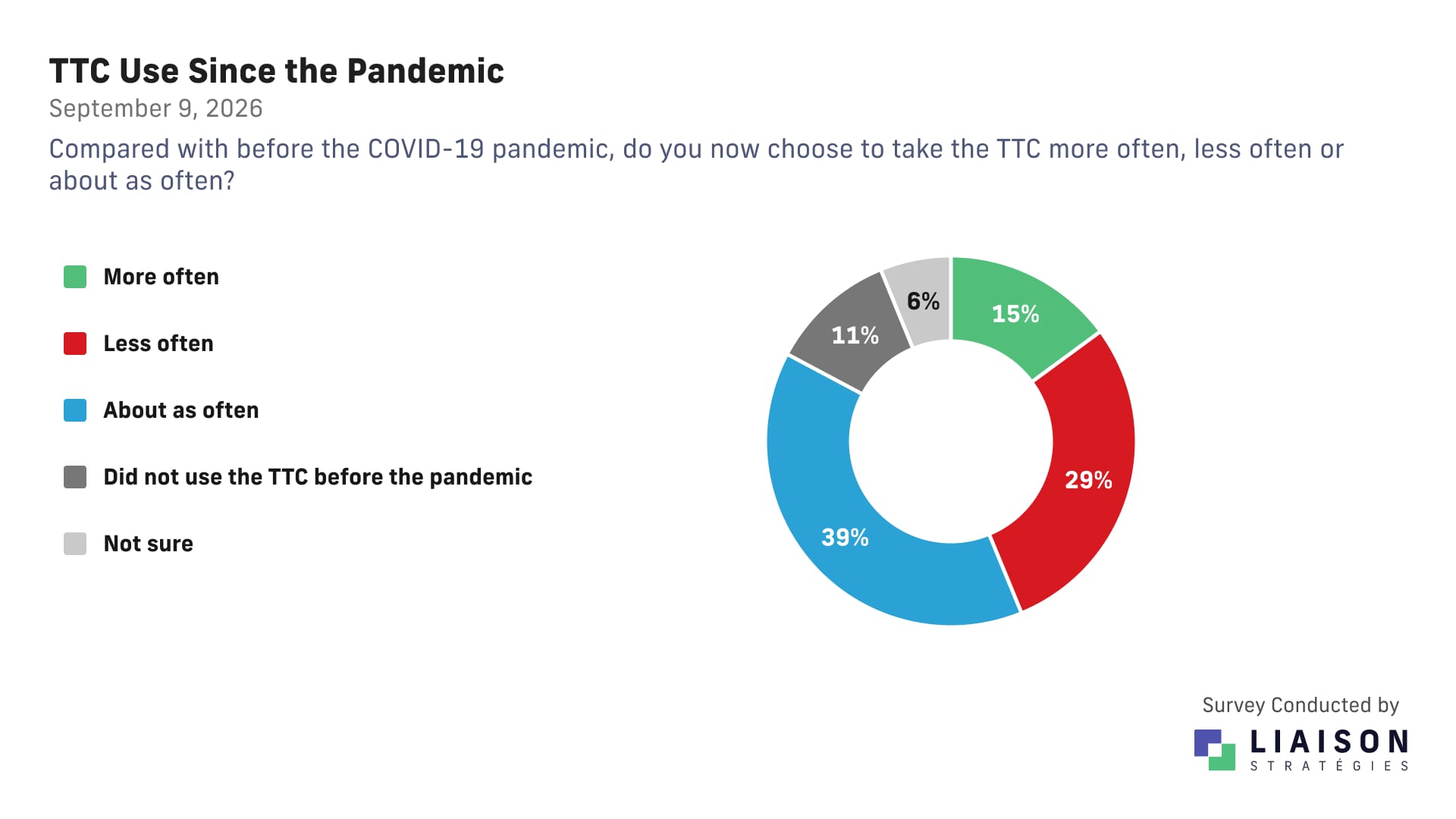
"The TTC numbers show how much ridership behaviour has changed since the pandemic. Twenty-nine per cent say they take the TTC less often than they did before COVID-19, while only 15% say they take it more often."
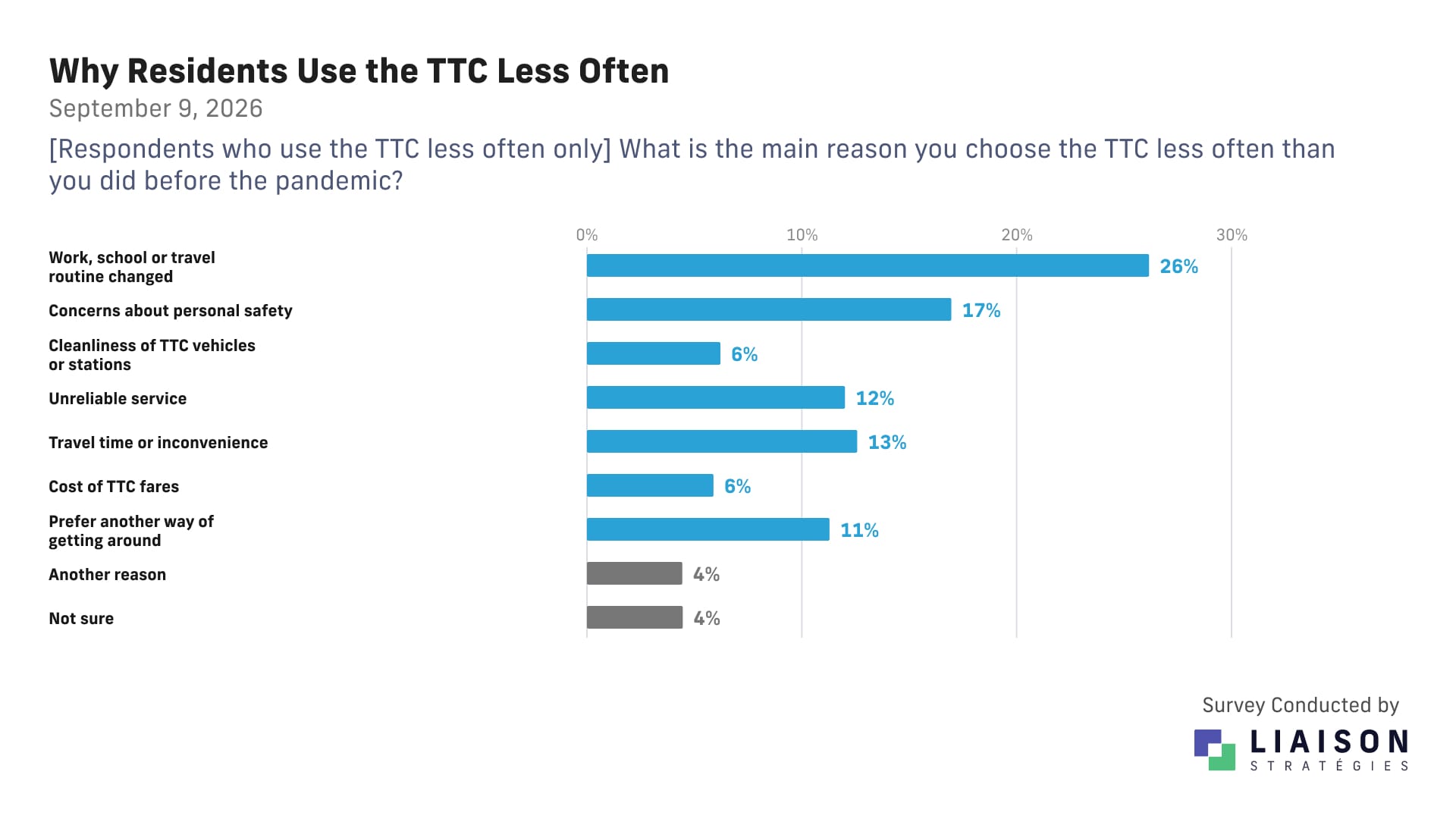
"The biggest reason for taking the TTC less often is changed routines, at 26%. But safety is next at 17%, followed by travel time or inconvenience at 13% and unreliable service at 12%. That means the TTC's challenge is partly post-pandemic work patterns, but also the basics of service and confidence."
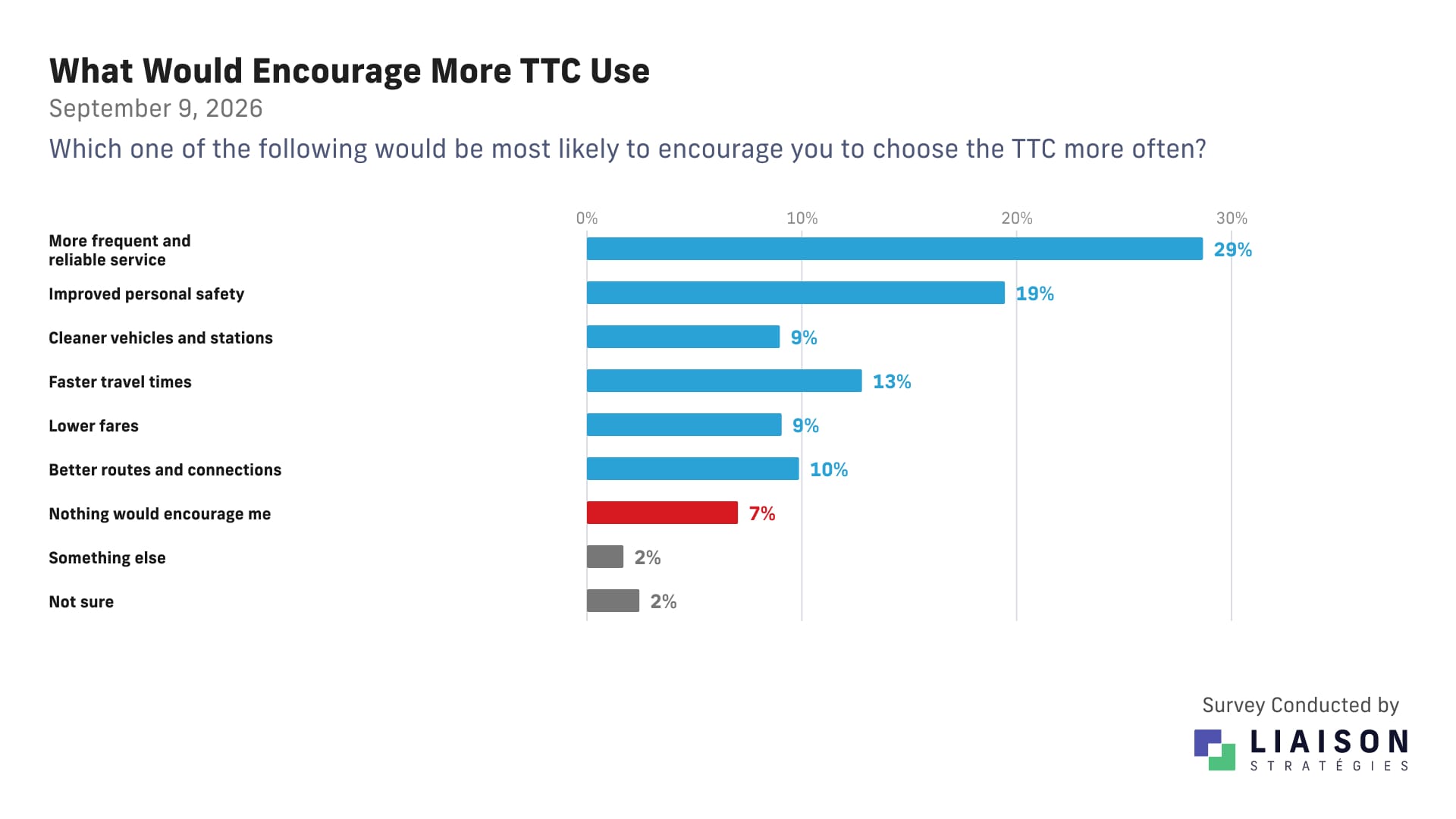
"The public is also very clear on what would get more people onto transit. More frequent and reliable service is first at 29%, followed by improved personal safety at 19%. Lower fares are not the lead answer. Reliability is."
"The political story is that Chow is ahead, but Toronto's governing problems are becoming more expensive and less forgiving. A mayor can lead the ballot and still face voters who are unhappy with the city's direction, resistant to tax hikes, and impatient with transit that does not feel reliable enough."
-30-
Detailed Poll Report:
Detailed Tables:
About Liaison Strategies
Liaison Strategies is a national public opinion research firm. With 13 years of experience in Canadian polling, David Valentin, principal, has fielded hundreds of projects at the municipal, provincial and federal levels and appeared across Canadian media to discuss insights. Liaison is a member of the Canadian Research Insights Council (CRIC), Canada's voice of the research, analytics, and insights profession both domestically and globally.