Parents More Open to Classroom Screen Use Than Canadians Without Kids
A new Liaison Strategies national survey finds households with children are more open to classroom technology, while Canadians remain cautious about AI doing student work or grading.

September 8, 2026 (Toronto, ON) - A new Liaison Strategies national survey finds that Canadians with children in the household are more open to classroom technology than Canadians without children, even as the public remains cautious about artificial intelligence in schools.
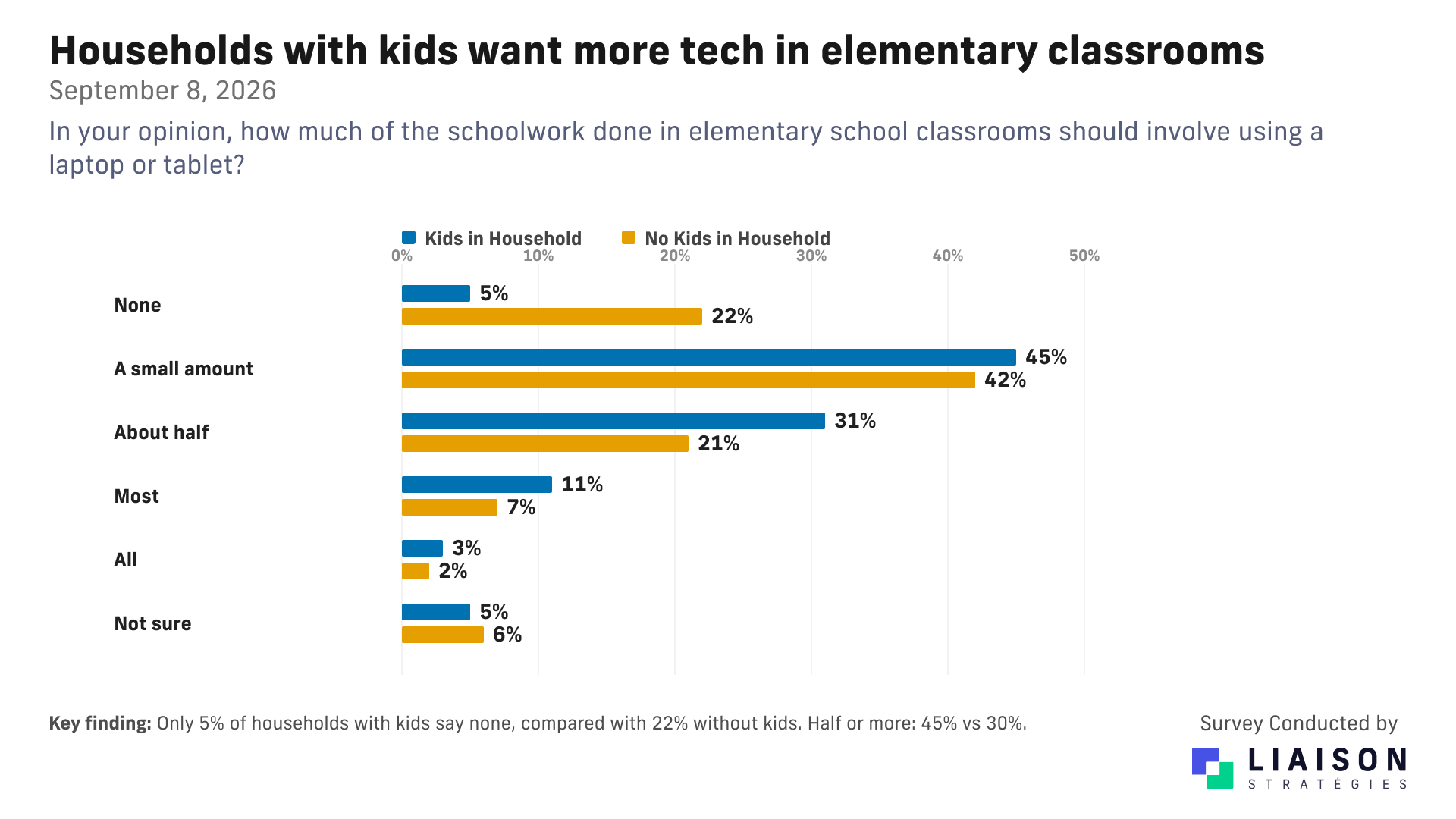
Only 5% of households with children say laptops and tablets should have no role in elementary schoolwork, compared with 22% of households without children.
Liaison surveyed a random sample of 1,526 Canadians from August 23 to September 5, 2026, using Interactive Voice Recording (IVR) technology. Participants were reached through random digit dialling (RDD) across both landline and cellular phone networks. The resulting data was weighted to match targets based on the 2021 Census. For the total sample, the margin of error is +/- 2.5 percentage points, 19 times out of 20.
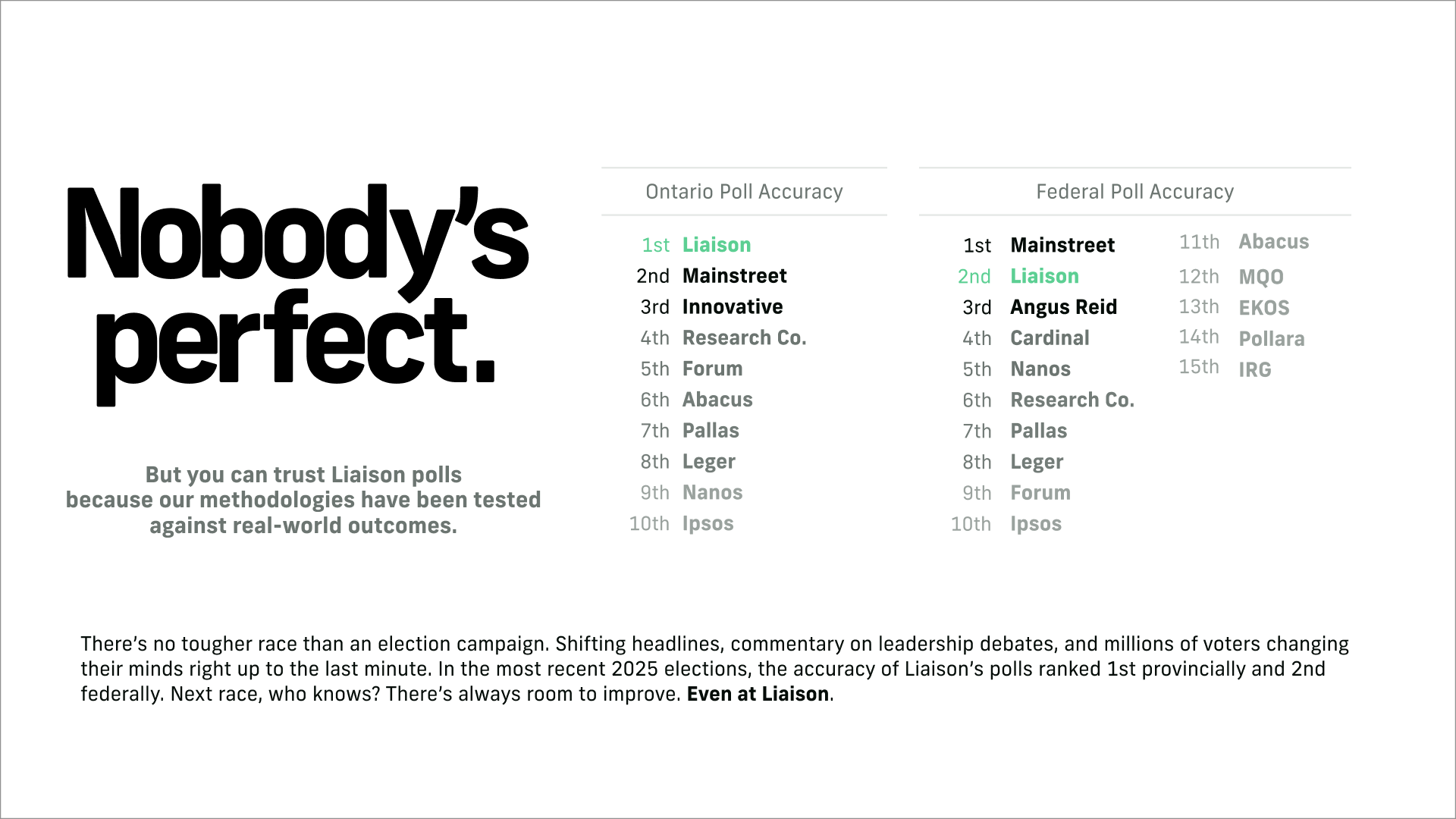
Liaison Strategies is one of the most accurate polling firms in Canada. It ranked #1 in accuracy in the 2025 Ontario election and #2 nationally in the 2025 federal election. Liaison is a member of the Canadian Research Insights Council.
David Valentin, Principal at Liaison Strategies, said:
"The intuitive story is that parents would be more anti-screen, but that is not what these numbers show. Households with kids are much less likely to say there should be no laptop or tablet use in elementary classrooms."
"That does not mean parents want a screen-only classroom. The preference is controlled use, not no use."
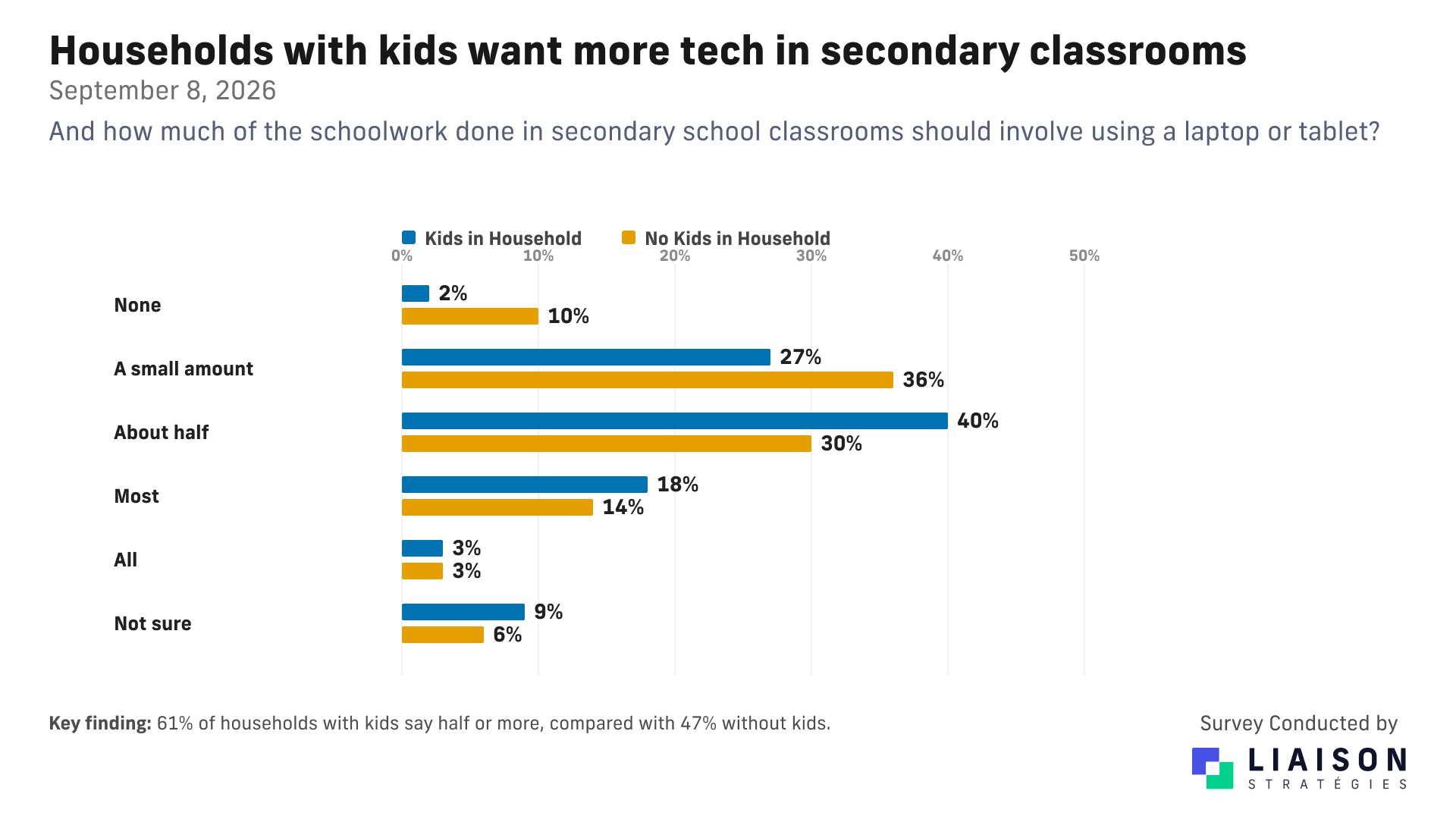
"Parents are also more open to heavier technology use in secondary school. Among households with kids, 61% say about half, most, or all secondary schoolwork should involve laptops or tablets. Among households without kids, that falls to 47%."
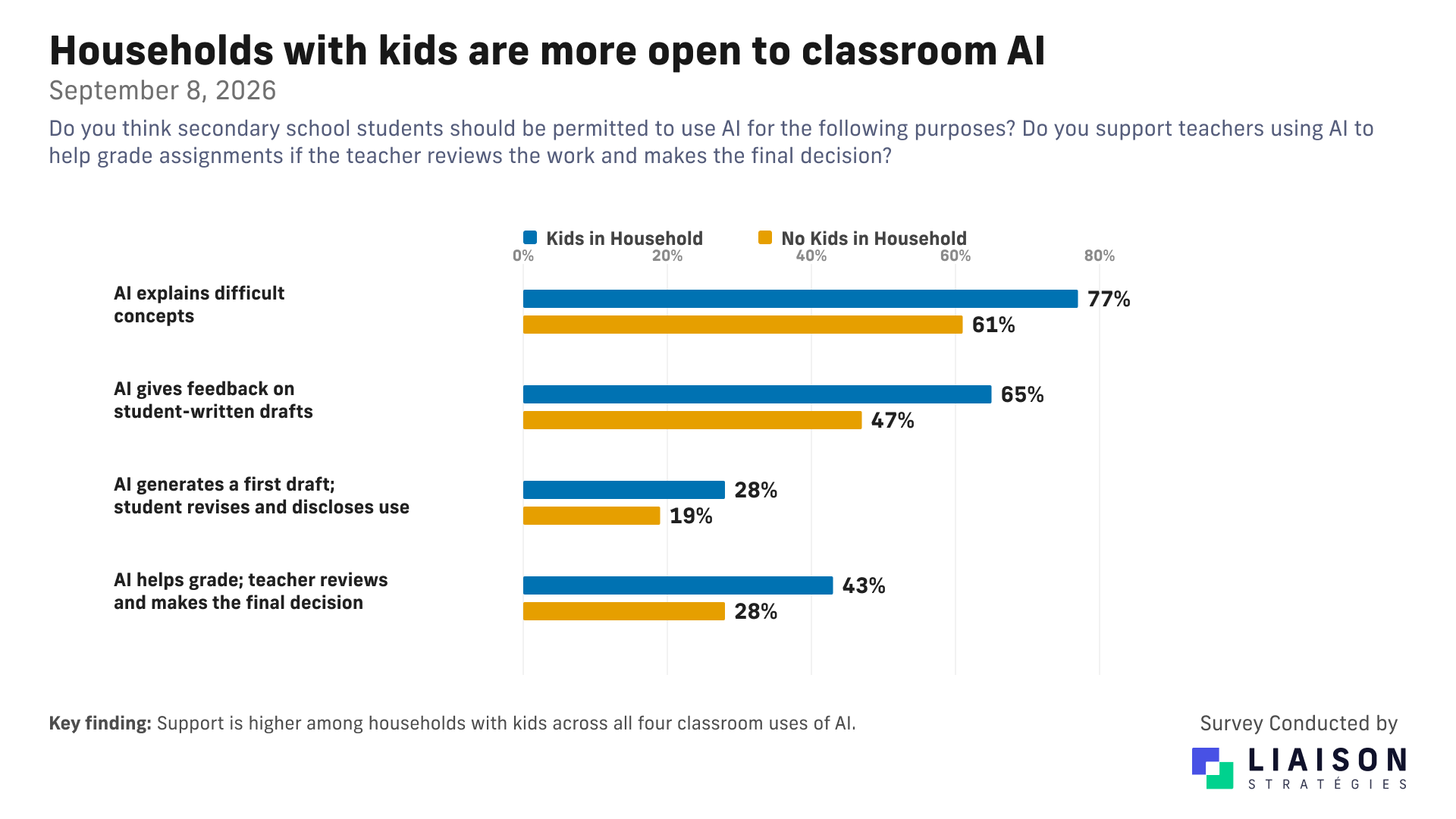
"The public is drawing a clear line between using technology as a tool and letting technology do the work. AI explaining a concept is acceptable to most Canadians. AI writing the first draft or helping grade assignments is a much harder sell."
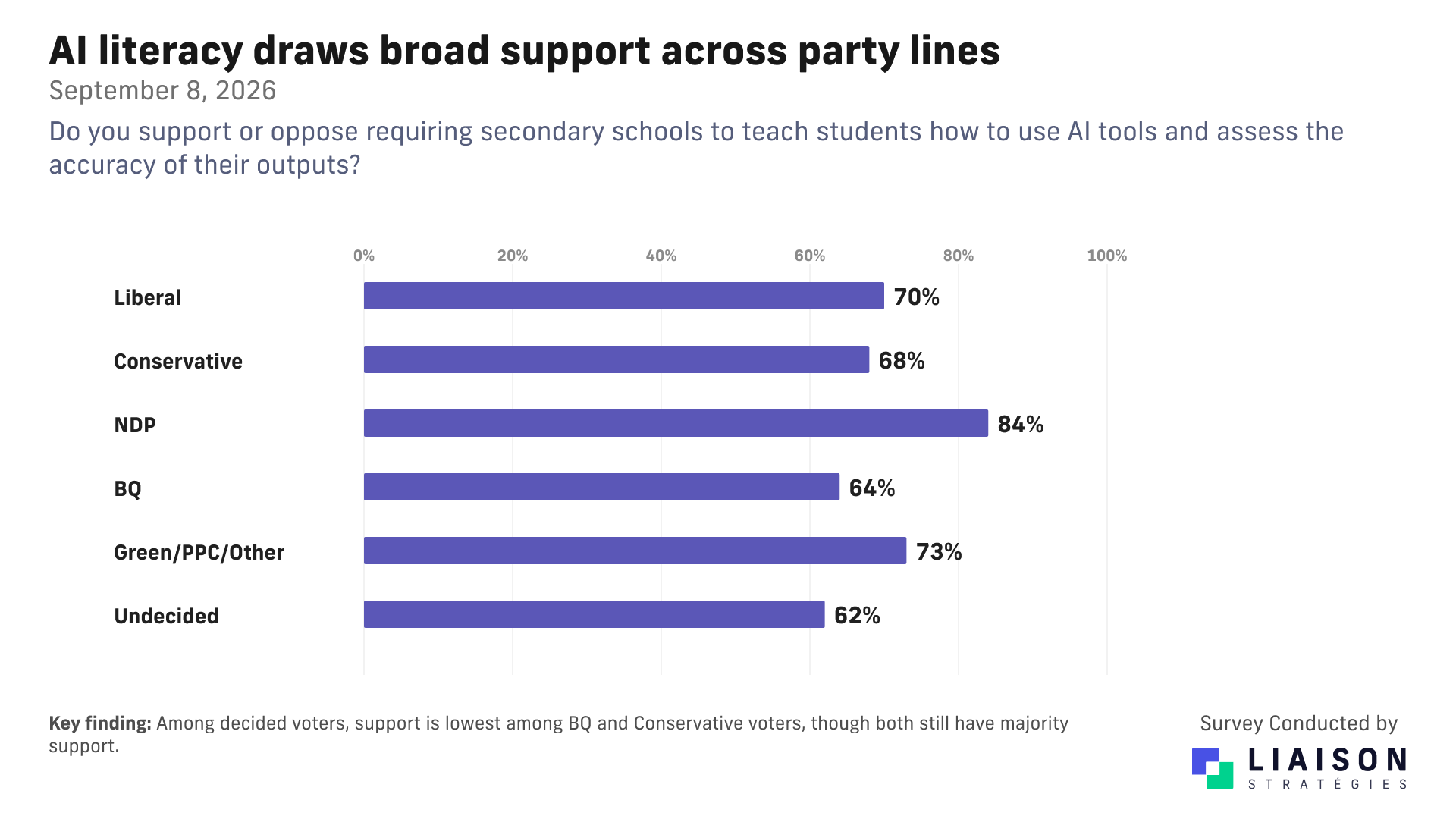
"Seventy per cent of Canadians support requiring students to learn how to use AI tools and how to judge the accuracy of AI-generated information. That is the part of the AI debate where there is real public consensus."
"Support for AI literacy is not evenly distributed. It is lowest among BQ voters at 64%, followed by Conservative voters at 68%."
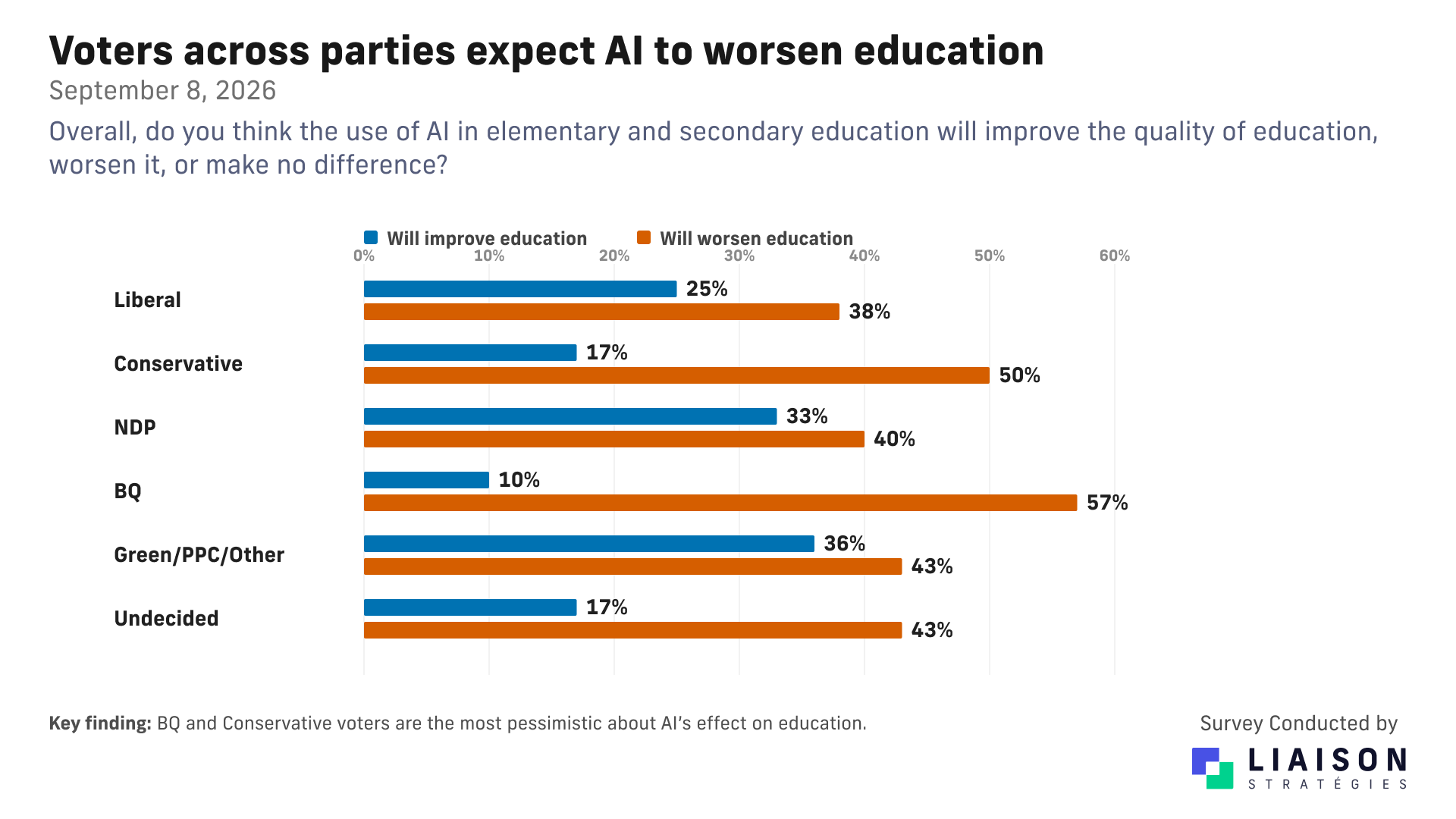
"BQ and Conservative voters are the most pessimistic about AI's effect on education. Fifty-seven per cent of BQ voters and 50% of Conservative voters say AI will worsen education."
"This is a governance problem for schools. Canadians want students taught how to understand AI, but they are not convinced schools are ready to manage it."
"Overall, 70% of Canadians support mandatory AI literacy in schools, while 20% oppose it and 10% are not sure. Sixty-six per cent say students should be allowed to use AI to explain concepts they are struggling with."
"Canadians are much more resistant to AI being used to generate schoolwork or evaluate students. Sixty-nine per cent say students should not be allowed to use AI to generate a first draft of an essay or assignment, while 56% oppose teachers using AI-assisted tools to help grade assignments."
"Canadians are not convinced schools are ready for AI: 58% say schools are not very well or not at all equipped to handle AI in the classroom, while just 30% say they are very or somewhat well equipped."
-30-
Detailed Poll Report:
Detailed Tables:
About Liaison Strategies
Liaison Strategies is a national public opinion research firm. With 13 years of experience in Canadian polling, David Valentin, principal, has fielded hundreds of projects at the municipal, provincial and federal levels and appeared across Canadian media to discuss insights. Liaison is a member of the Canadian Research Insights Council (CRIC), Canada's voice of the research, analytics, and insights profession both domestically and globally.