December 10, 2025 (Toronto, ON) – A new national survey from Liaison Strategies finds most Canadians believe impaired driving is more common during the holidays and want to see more police checkpoints on the roads.
Sixty two per cent say people in their community drive after drinking or using drugs “a lot more” or “a bit more” during the holiday season compared to the rest of the year. Only three per cent think it happens less often.
A majority, 54 per cent, say police should increase checkpoints over the holidays. Just 16 per cent are opposed, while 12 per cent say it depends and 19 per cent are not sure.
“When people look around their own community, they see impaired driving as a bigger problem at this time of year,” said David Valentin, Principal at Liaison Strategies. “They want to see enforcement keep up with that reality.”
Conducted from December 5-7, 2025, using Interactive Voice Response (IVR), the survey polled 1,000 Canadians. The margin of error is ±3.09 percentage points, 19 times out of 20.
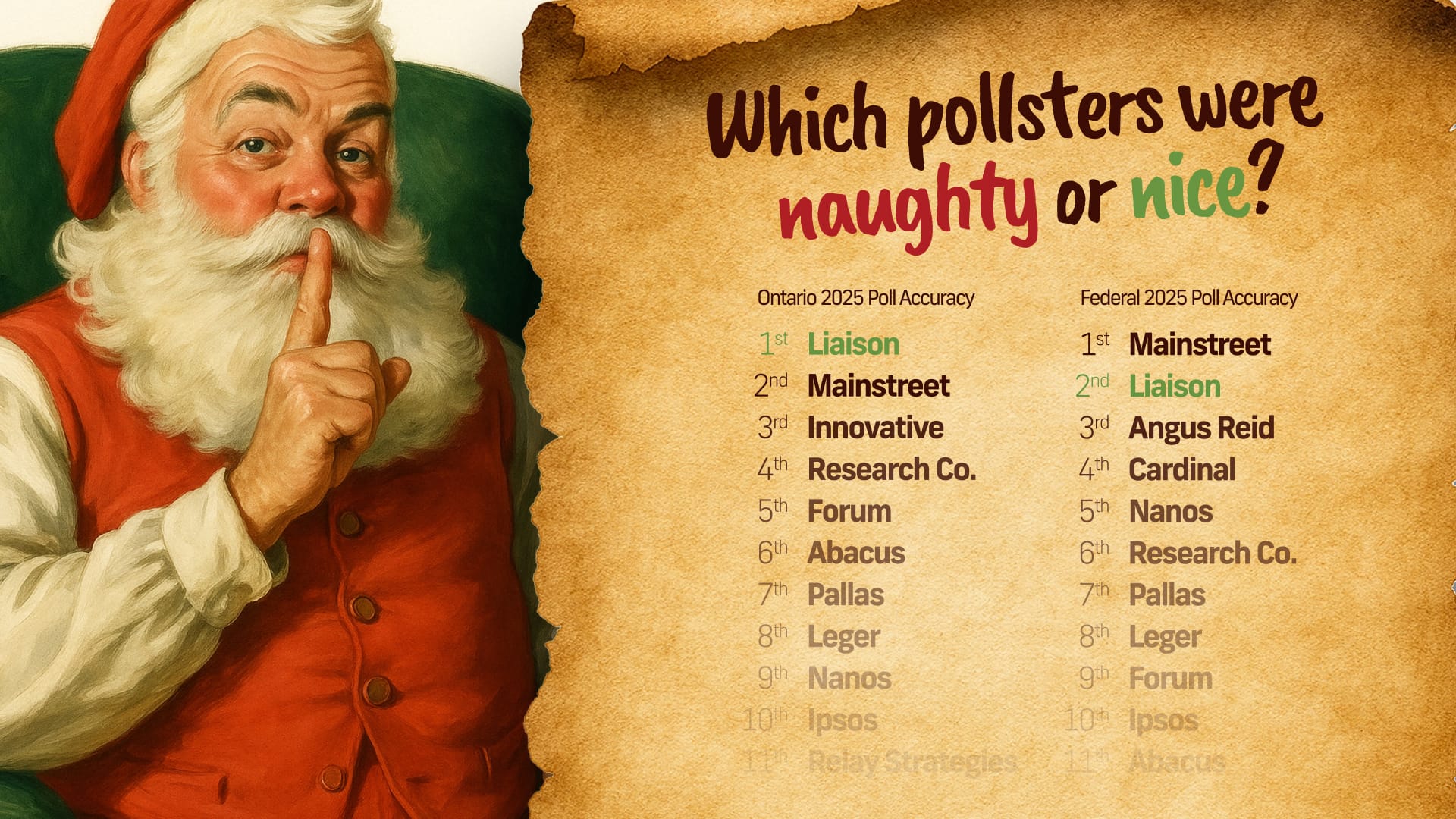
Liaison Strategies is one of the most accurate polling firms in Canada. It ranked #1 in accuracy in the 2025 Ontario election and #2 nationally in the 2025 federal election. Liaison is a member of the Canadian Research Insights Council (CRIC).
How people decide they are “OK to drive”
Canadians use a mix of gut feeling, rough rules and abstinence to decide whether they are safe to drive after drinking. • Twenty three per cent say they go by how they feel. • Twenty per cent say they wait a bit and assume they are fine. • Nineteen per cent count drinks. • Seventeen per cent say they do not drive after drinking. • Twenty per cent choose something else.
“Far too many people are still guessing when it comes to whether they are okay to drive,” Valentin said. “Going by gut feeling is not a substitute for a safe ride home.”
Experience with impaired drivers and intervention
More than one in five Canadians, 21 per cent, report that in the past year they have been a passenger in a vehicle when the driver had been drinking or using substances.
At the same time, almost half the country has stepped in to stop someone from driving impaired at some point. Twenty three per cent say they have intervened in the past year, while another 22 per cent say they did so more than a year ago. Fifty five per cent say they have never intervened.
“Canadians are not shy about stepping in with friends and family, but we still have a lot of people who have ridden with someone they think should not be driving,” Valentin said.
Alcohol remains the top concern, but polysubstance use and distraction matter Asked which form of impairment is most dangerous for driving, 37 per cent pick alcohol, followed by multiple substances at once at 23 per cent. Ten per cent say distracted driving is most dangerous, another 10 per cent choose fatigue or lack of sleep, eight per cent select cannabis and five per cent pick other recreational drugs. Seven per cent say they are all equally dangerous.
Low confidence in cannabis roadside tests and mixed views on being caught Canadians are split on police roadside cannabis impairment tests. Half say they have “a great deal” or “some” confidence in those tests, while 31 per cent have “not much” or “no” confidence and 19 per cent are not sure.
When asked how likely it is that a driver in their area would be caught if they drove after drinking or using drugs, 52 per cent say it is very or somewhat likely. Thirty one per cent say it is unlikely and 17 per cent are not sure.
“Canadians want tougher enforcement at the holidays, but many are not convinced anyone will actually be caught or that the tools are up to date, especially around cannabis,” Valentin said.
“Public education, modern testing and visible checkpoints all have to go together if we want fewer tragedies on the road.”
About Liaison Strategies Liaison Strategies is a national public opinion research firm. With 12 years of experience in Canadian polling, David Valentin, principal, has fielded hundreds of projects at the municipal, provincial and federal levels and appeared across Canadian media to discuss insights. Liaison is a member of the Canadian Research Insights Council (CRIC), Canada’s voice of the research, analytics, and insights profession both domestically and globally.