Ottawa: 70% Say Homelessness Has Gotten Worse
A new Ottawa Compass survey finds 70% say homelessness has gotten worse and 63% disapprove of how the city is addressing homelessness and addiction.
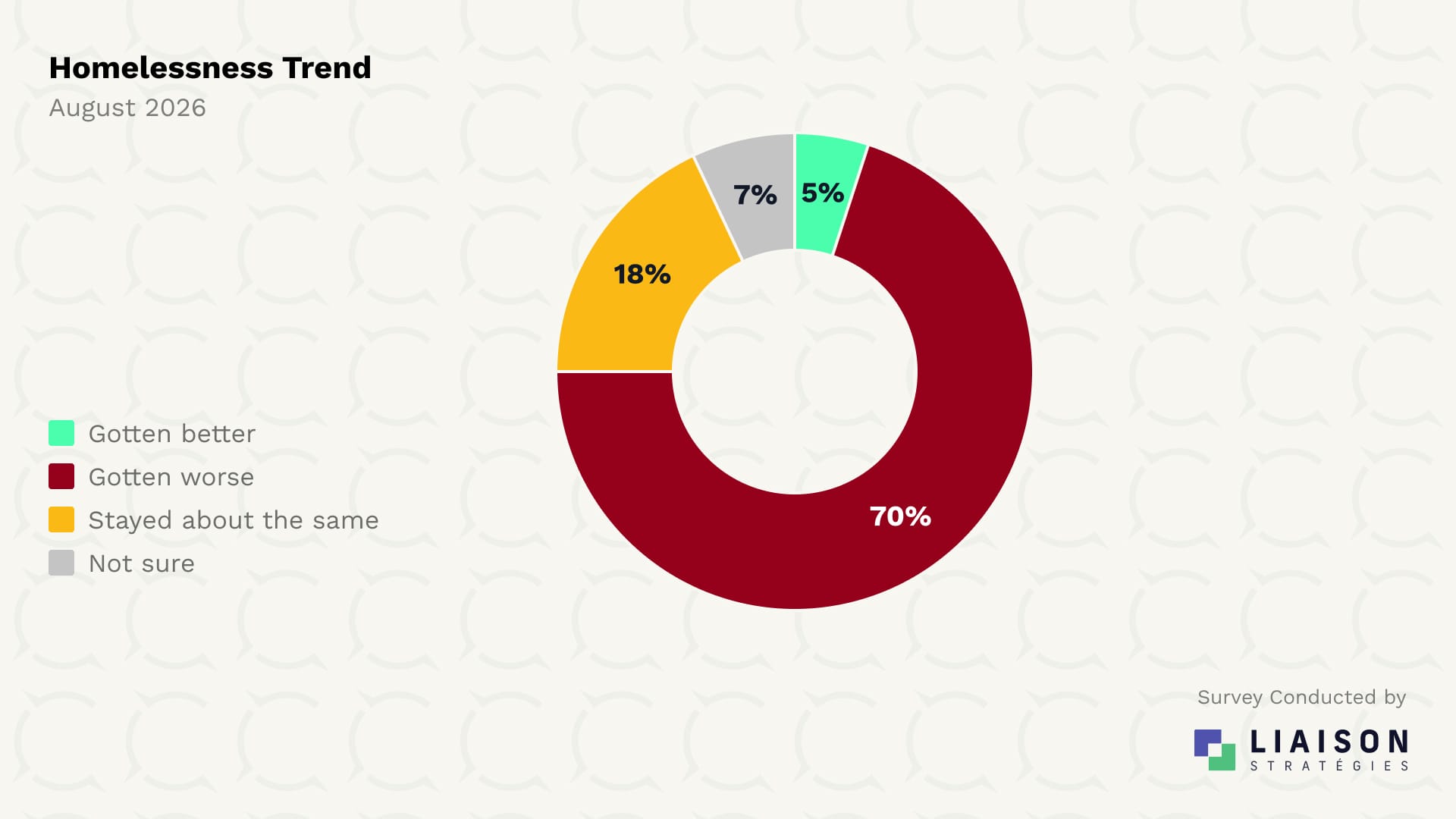
August 20, 2026 (Ottawa, ON) - A new Ottawa Compass survey conducted by Liaison Strategies finds deep public concern about homelessness and addiction in Ottawa, with 70% of residents saying homelessness has gotten worse over the past year.
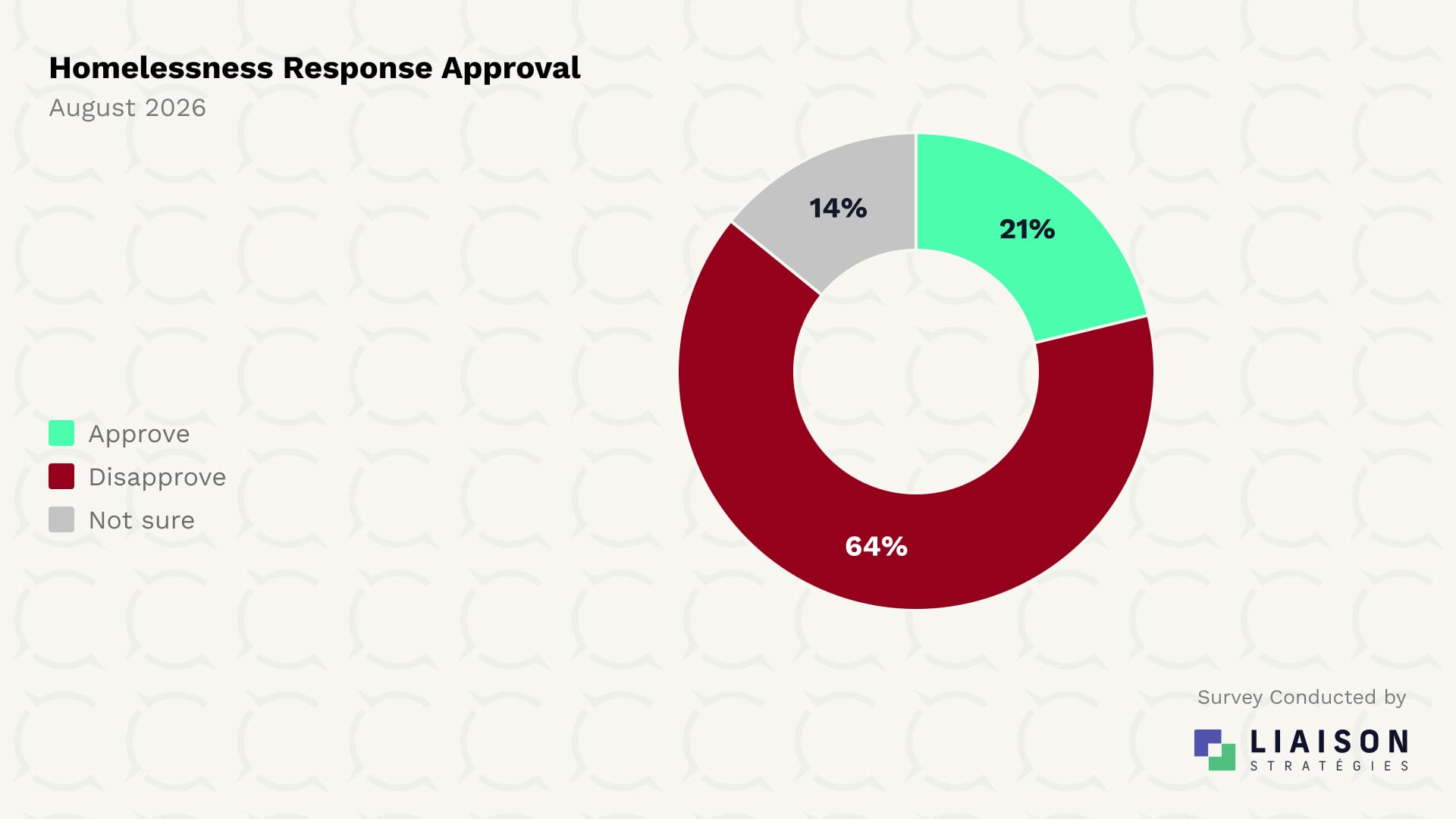
The survey finds 63% disapprove of how the City of Ottawa is addressing homelessness and addiction, while 23% approve and 14% are not sure.
Residents split between housing and treatment as the biggest obstacle to reducing homelessness. Twenty-six per cent point to a shortage of affordable and supportive housing, while 25% cite insufficient addiction and mental-health treatment. Broader economic and affordability pressures follow at 16%.
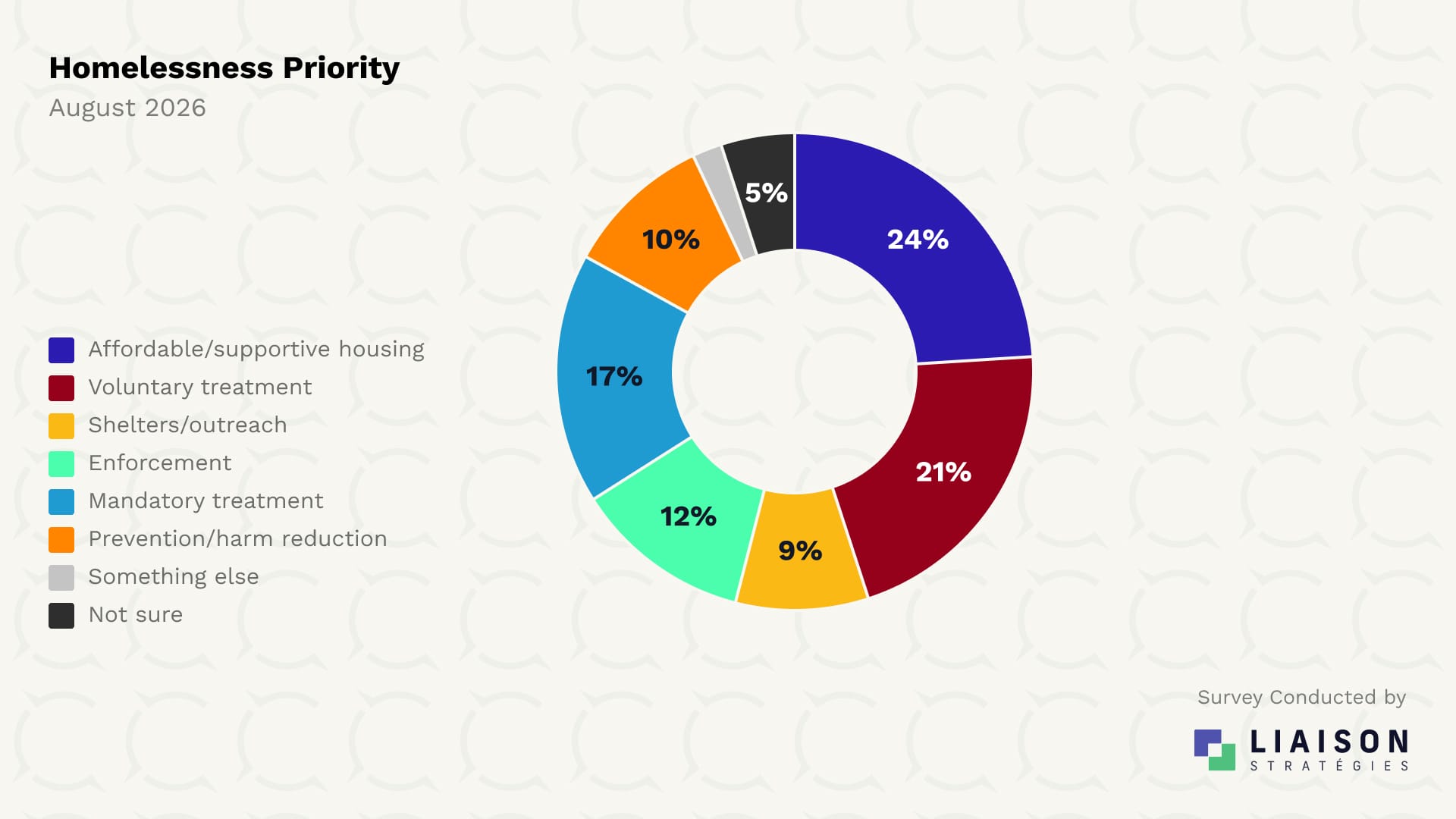
When asked which response governments should prioritize most, 25% choose building more affordable and supportive housing, 20% choose expanding voluntary addiction and mental-health treatment, and 18% choose allowing mandatory treatment in limited, high-risk circumstances.
The Ottawa Compass engaged Liaison Strategies to survey a random sample of 1,250 Ottawa residents from August 14 to 19, 2026, using Interactive Voice Recording (IVR) technology. Participants were reached through random digit dialling (RDD) across both landline and cellular phone networks. The resulting data was weighted to match targets based on the 2021 Census. For the total sample, the margin of error is +/- 2.77 percentage points, 19 times out of 20.
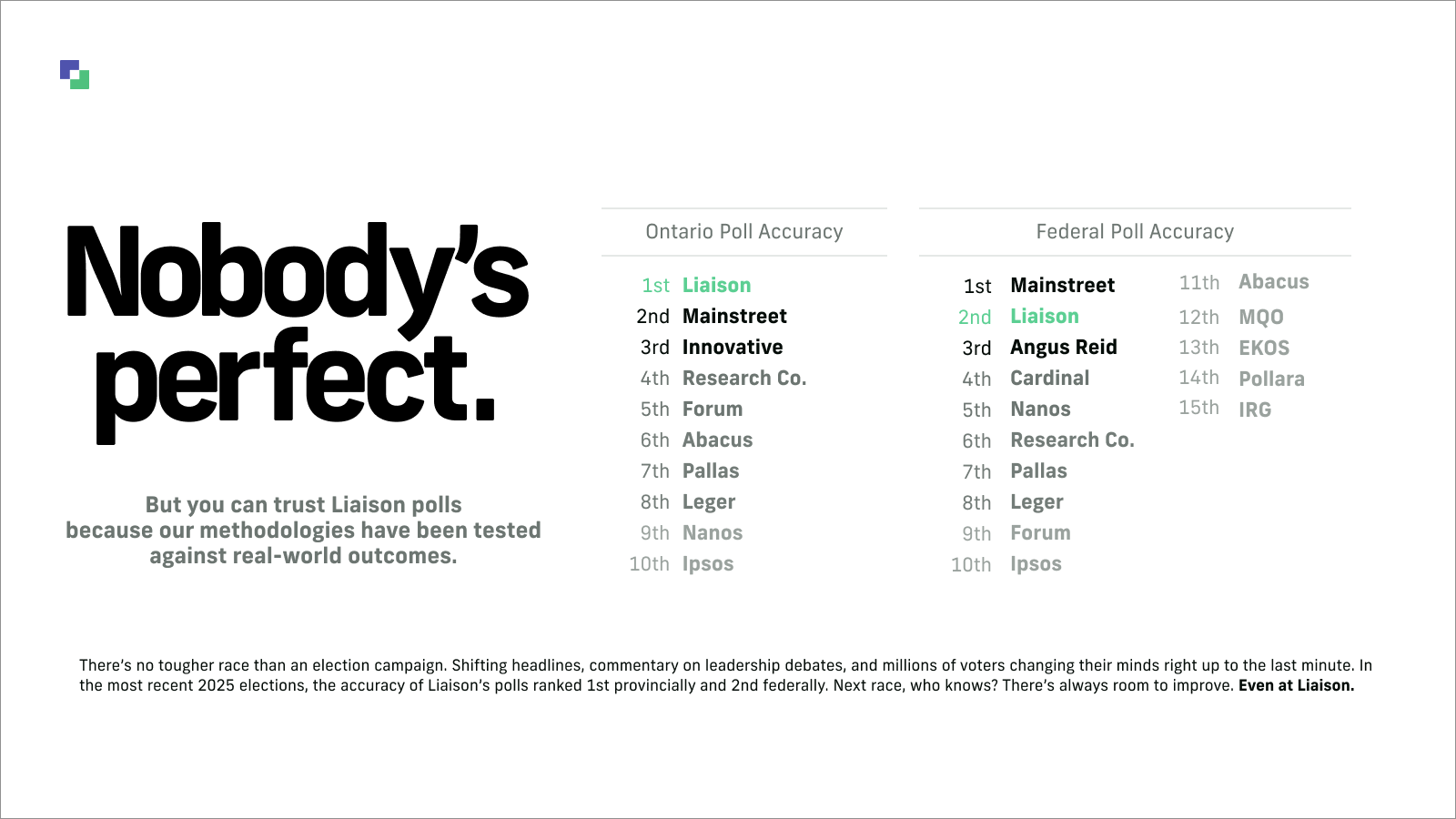
Liaison Strategies is one of the most accurate polling firms in Canada. It ranked #1 in accuracy in the 2025 Ontario election and #2 nationally in the 2025 federal election. Liaison is a member of the Canadian Research Insights Council.
David Valentin, Principal at Liaison Strategies, said:
"The homelessness numbers are stark. Seventy per cent of Ottawa residents say homelessness has gotten worse over the past year. Only 5% say it has gotten better."
"This is not just a sense that the problem exists. It is also a judgment on the response. Sixty-three per cent disapprove of how the city is addressing homelessness and addiction, compared to 23% who approve."
"The public is not identifying one single cause. Affordable and supportive housing is first at 26%, but addiction and mental-health treatment is right behind at 25%. Broader economic and affordability pressures are next at 16%."
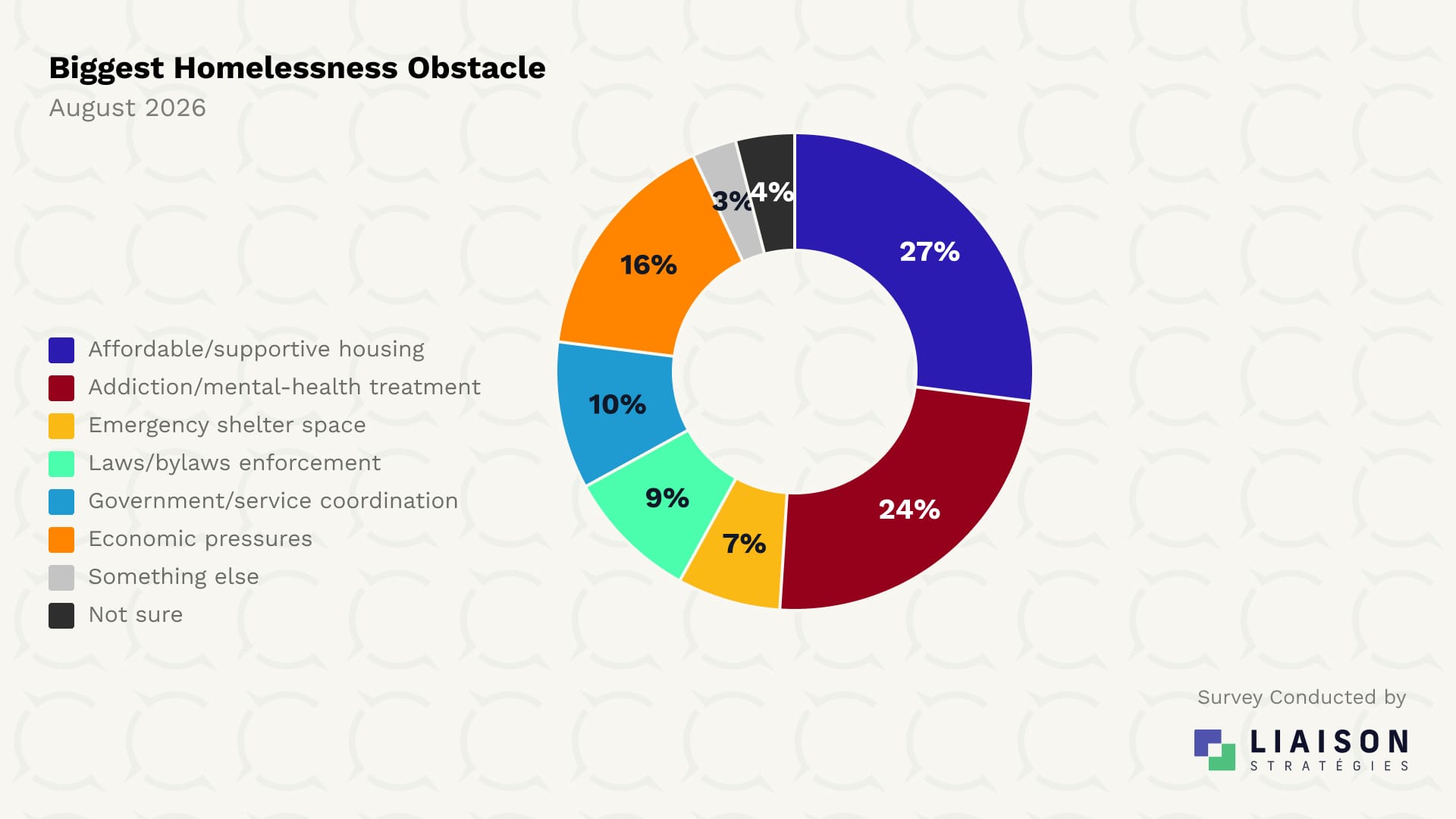
"That tells us voters are seeing homelessness as a housing issue, a health issue, and an affordability issue at the same time. The danger for governments is that a narrow answer may not meet the public's understanding of the problem."
"When residents are asked what governments should prioritize, housing leads, but not by a runaway margin. Twenty-five per cent choose building more affordable and supportive housing, 20% choose expanding voluntary addiction and mental-health treatment, and 18% choose mandatory treatment in limited, high-risk circumstances."
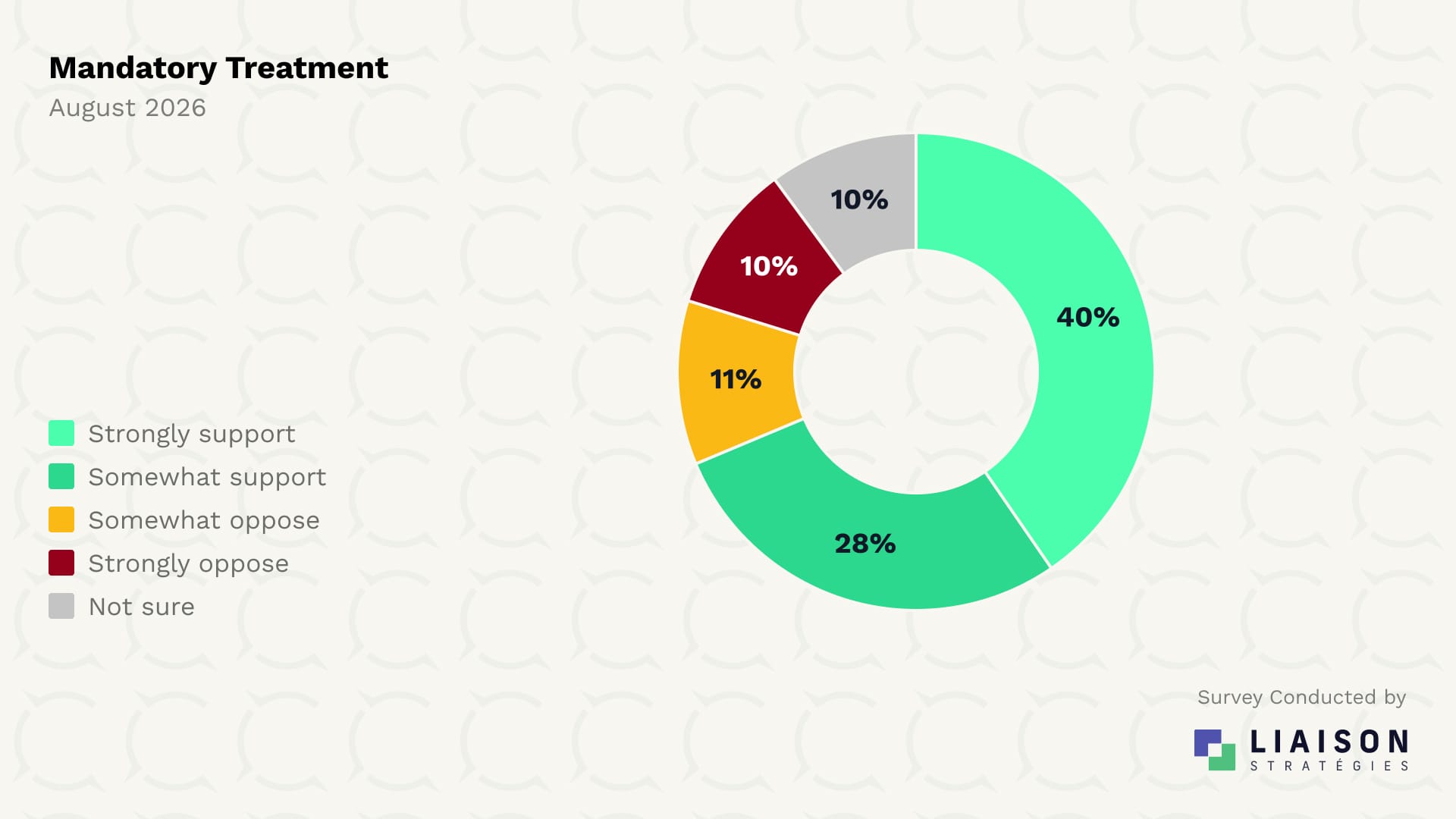
"There is also meaningful support for court-required treatment in limited, high-risk cases. Forty-two per cent strongly support it and 27% somewhat support it, for a total of 69% support."
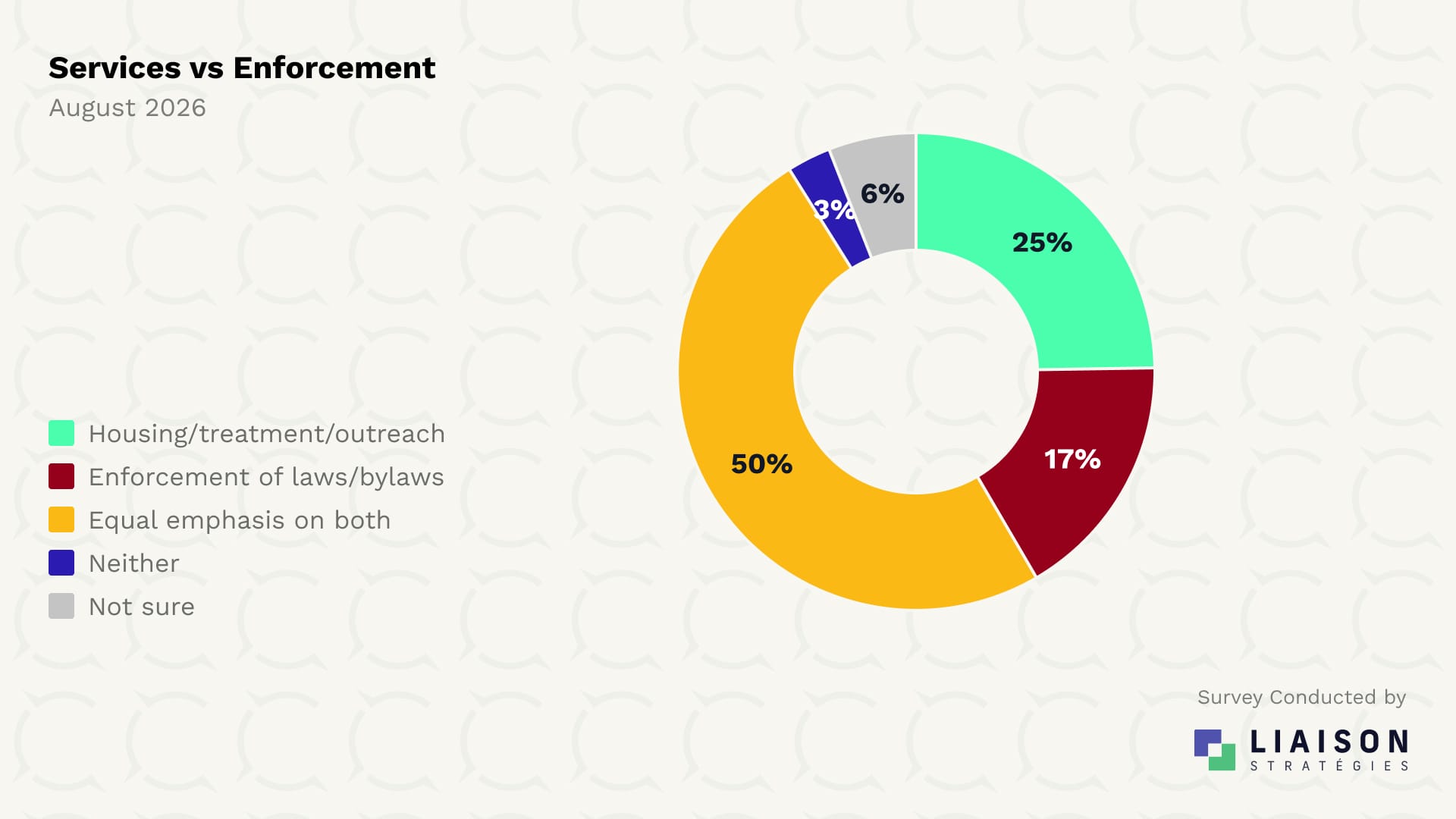
"But Ottawa residents are not choosing enforcement over services. Forty-nine per cent say Ottawa should put equal emphasis on housing, treatment and outreach, and on enforcing laws and bylaws around public drug use and encampments."
"The candidate trust numbers are a warning to everyone in the mayoral race. Mark Sutcliffe leads on homelessness and addiction, but only at 26%. Alex Lawson is at 21%, Jeff Leiper is at 15%, Neil Saravanamuttoo is at 8%, and 16% are not sure. No candidate has a dominant hold on this issue."
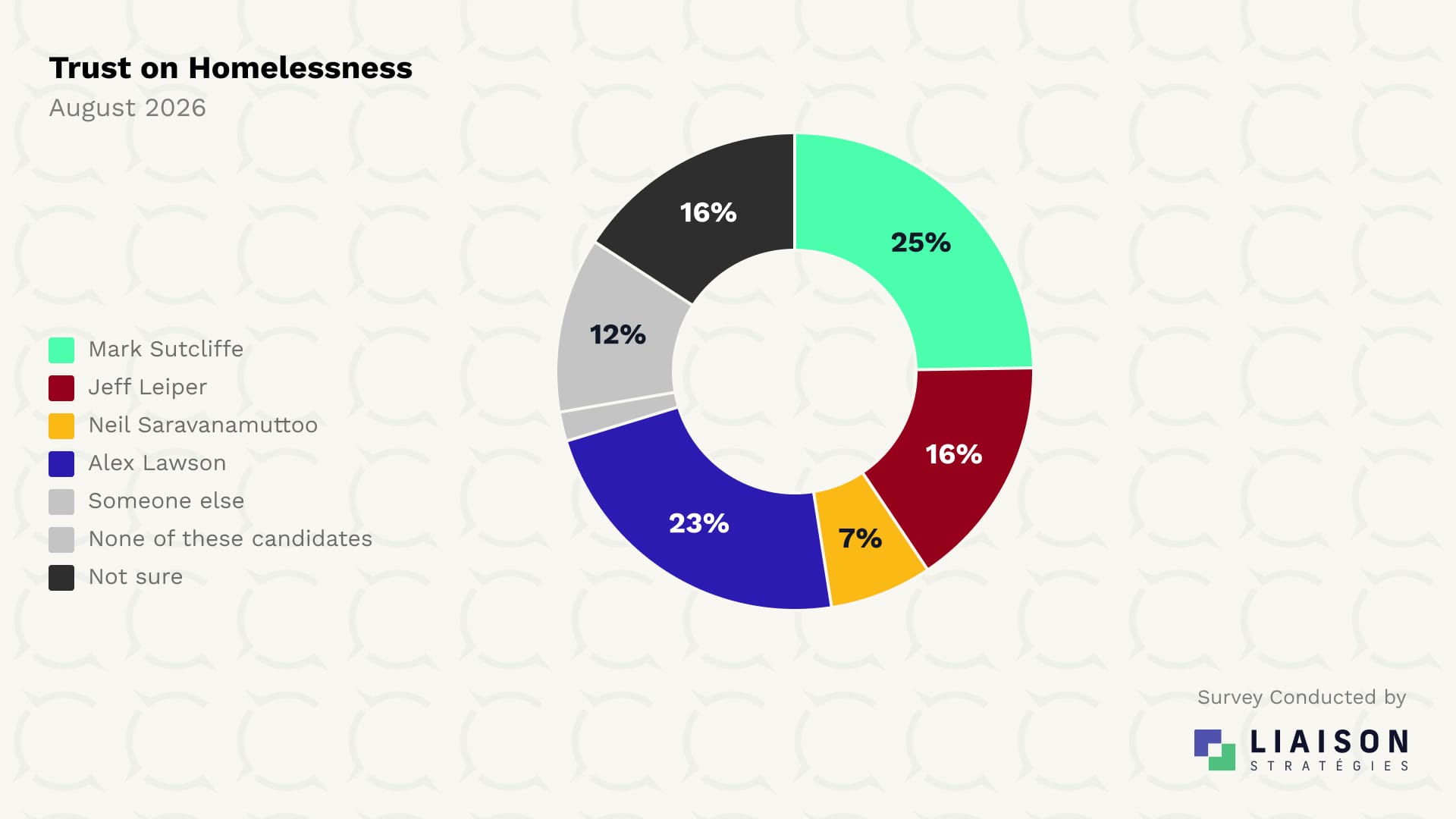
"Politically, homelessness is not a side issue in Ottawa anymore. The public sees deterioration, disapproves of the response, and wants a mix of housing, treatment, outreach and order. That creates pressure on every candidate to show they have more than a slogan."
-30-
Detailed Poll Report:
Detailed Tables:
About Liaison Strategies
Liaison Strategies is a national public opinion research firm. With 13 years of experience in Canadian polling, David Valentin, principal, has fielded hundreds of projects at the municipal, provincial and federal levels and appeared across Canadian media to discuss insights. Liaison is a member of the Canadian Research Insights Council (CRIC), Canada's voice of the research, analytics, and insights profession both domestically and globally.